Originating the following paper discusses a tools about hazard-resistant units among commercial workspaces.
Performing appropriately among dangerous zones like manufacturing factories involves customized implements for the purpose of thwart likely occurrences. Ignition-safe illumination systems are indispensable constituents in those spaces, designed to survive energy releases, inflammable effluents, and detonating zones. Different appliances are not originally risk-free; instead of that they are constructed to trap any inward arc or flash and restrict it from producing a greater combustion in the vicinal site. This overview delivers significant instruction about explosion-proof illumination, their functions, and defense elements for implementing them appropriately.
Appreciating Explosion Proof Lighting Standards
Conforming to prescribed intrinsically safe lighting codes can be intricate, especially inside operations engaged in hazardous atmospheres. These guidelines – often derived from worldwide bodies for instance the National Electrical Council (NEC), ATEX (Europe), and IEC – enforce rigorous design and installation procedures to minimize the danger of fires from power devices. Understanding such standards is decisive for ensuring staff safety and observance with mandatory responsibilities.
Semiconductor Ignition Resistant Light Sources: Capability & Defense
Semiconductor detonation-proof illumination devices exhibit a notable enhancement over classic vapor illumination in environments where catchable chemicals are exposed. These strong tools also provide exceptional energy efficiency, resulting in lessened maintenance charges, but significantly promote a higher rank of risk mitigation by reducing the chance of fire outbreaks owing to electric faults}.
Explosive Perilous Setting Risky Proof Explosion Flare Flash Resistant} Lights : A In-depth Review
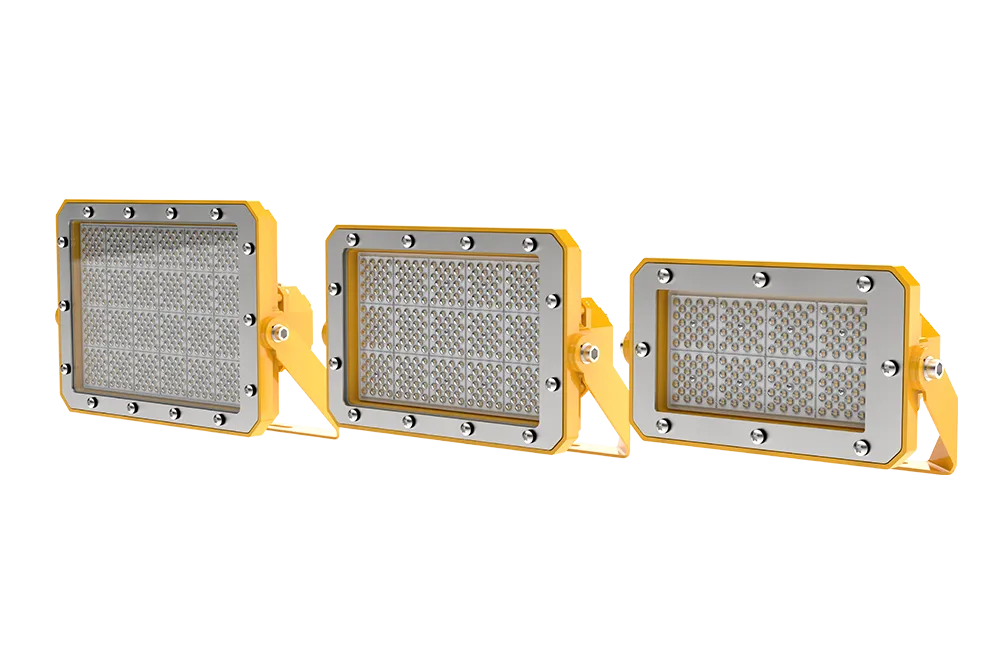
Explosion Certified Unsafe Zone Hazardous Proof} Units are exclusively engineered lighting applications built to perform safely within potentially inflammable areas. These resilient fixtures inhibit sparks, temperature and current sparks from producing a major explosion. They normally incorporate state-of-the-art designs, featuring specifically encased housings and constitutionally safe circuitry assemblies to provide safety benchmarks in fields like mineral & natural gas processing, synthesis plants, extraction operations, and chemical production.
Picking the Optimal Explosion-Proof Sources for Critical Sites
Figuring out the best ignition-proof lighting for a defined exclusion zone necessitates precise scrutiny. Aspects such as the type (e.g., Segment I, II, or III and areas A) shall be precisely considered to attain compliance with appropriate hazard control protocols. Besides the environment's essential risks, take into account external factors, comprising coldness and atmospheric moisture, to choose a hardy and stable remedy. Typically check a trained specialist to advise your conclusion.
Regions Where Are Explosion Proof Lights?
Explosion-proof also known as intrinsically safe|hazardous location|Class-rated} lighting fixtures are undeniably needed in particular areas where dangerous gases or dust could likely create a hazardous atmosphere. This often includes manufacturing manufacturing plants, varnish application areas, seed handling facilities, and sanitary treatment plants. Regulations, such as those from ATEX and OSHA, command their setup in these regions to lessen the risk of combustion and secure safety performance.
Advantages of LED in Intrinsically Safe Lighting
Utilizing Semiconductor technology for detonation-safe units offers a remarkable range of perks. First, solid-state lights boast a much longer activity span compared to traditional neon fixtures, reducing repair charges and downtime. They are also primarily safer, producing attenuated temperature which lessens the risk of arcing in perilous atmospheres. Additionally, light emitting diodes are notably energy saving, leading to minimized power expenditures and a cut down carbon influence. Finally, the solid build of LED appliances endures the harsh locales typical of hazardous location areas.
- Amplified Functional Period
- Lower Overhaul Fees
- Improved Safeguarding
- Lower Watt Expenditure
- Improved Strength
Upkeeping and Testing Explosion Proof Lighting Systems
Periodic checking and comprehensive survey of ignition-resistant lighting frameworks are essentially indispensable for securing risk management and reducing potential pitfalls. This requires a systematic review of all components, such as illumination units, conduit, electrical lines, and interconnected terminal enclosures. Primarily, verify for deterioration, body damage, and sufficient ground connection. Furthermore, verify that complete labels are clear and that the light units meets pertinent directives.
- Complete surface inspections.
- Inspect wire interfaces.
- Validate ignition safety.
Forward Outlook of Explosion Proof Lighting Technology
Growing landscape of explosion-proof units technology predicts a significant shift from traditional designs. Future solutions will progressively incorporate automated capabilities, enabling external monitoring, diagnostics, and interactive control. We project a heightened adoption of LED technology, not only for its led explosion proof lights intrinsic energy efficiency, but also its capacity to facilitate built-in sensors for monitoring risky conditions. Also, materials analysis is promoting innovations in strong container materials, allowing for slimmer and enhanced designs, while sustaining the needed levels of hazard prevention.
- Augmented battery life for transportable applications.
- Blending with foreseeing maintenance structures.
- Design of maintenance-free lens approaches.